
Endodontic Treatment — Charlottesville, VA
Root canals have an undeserved reputation. The procedure doesn’t cause pain — it relieves it. At Charlottesville Dental Associates, we perform gentle, effective root canal therapy that saves your natural tooth and gets you out of pain, often in a single visit.
The fear around root canals is one of the most persistent myths in dentistry — and one of the most harmful. Because of it, patients delay treatment until a manageable infection becomes a dental emergency. The truth is that modern root canal therapy, performed under local anesthesia, is a routine procedure that most patients describe as far less uncomfortable than they expected.
At Charlottesville Dental Associates, we’ve performed root canal therapy for patients from across Charlottesville, Crozet, Waynesboro, Staunton, and Albemarle County for over 25 years. We take the time to ensure you’re completely numb before we begin, we explain every step as we go, and we work efficiently so you spend as little time in the chair as possible.
More importantly, root canal therapy saves your natural tooth. Losing a tooth sets off a cascade of problems — neighboring teeth shift, bone resorbs, and replacement options like implants or bridges are far more involved than the root canal you were avoiding. Preserving your natural tooth is almost always the better long-term choice, and root canal therapy makes that possible.
When the pulp inside a tooth becomes infected or dies, root canal therapy removes that tissue, eliminates the infection, and seals the tooth — allowing you to keep your natural tooth for years or even a lifetime.
Some of these are obvious. Others are easy to dismiss — until the infection spreads. If you’re experiencing any of these, come in for an evaluation.
Deep, throbbing pain in a tooth — especially pain that radiates to the jaw, ear, or neck — is one of the most common signs of pulp infection. This kind of pain doesn’t go away on its own.
If sensitivity to hot or cold lingers for more than a few seconds after the stimulus is removed — or if cold actually relieves your pain — that’s a strong indicator of pulp damage or infection.
A tooth that has turned gray, brown, or noticeably darker than surrounding teeth may indicate that the pulp tissue inside has died. This can happen gradually after trauma or deep decay.
A recurring pimple-like bump on the gums near a tooth is a dental abscess — a pocket of infection draining through the gum tissue. This is a clear sign that the tooth’s pulp is infected and needs treatment.
Swelling around a tooth, in the jaw, or in the face can indicate a spreading dental infection. Facial swelling from a dental abscess can become a medical emergency if left untreated.
Some pulp infections cause no pain at all — they’re discovered only on routine X-rays as a dark shadow at the root tip (periapical abscess). Catching these early means simpler treatment and a better outcome.
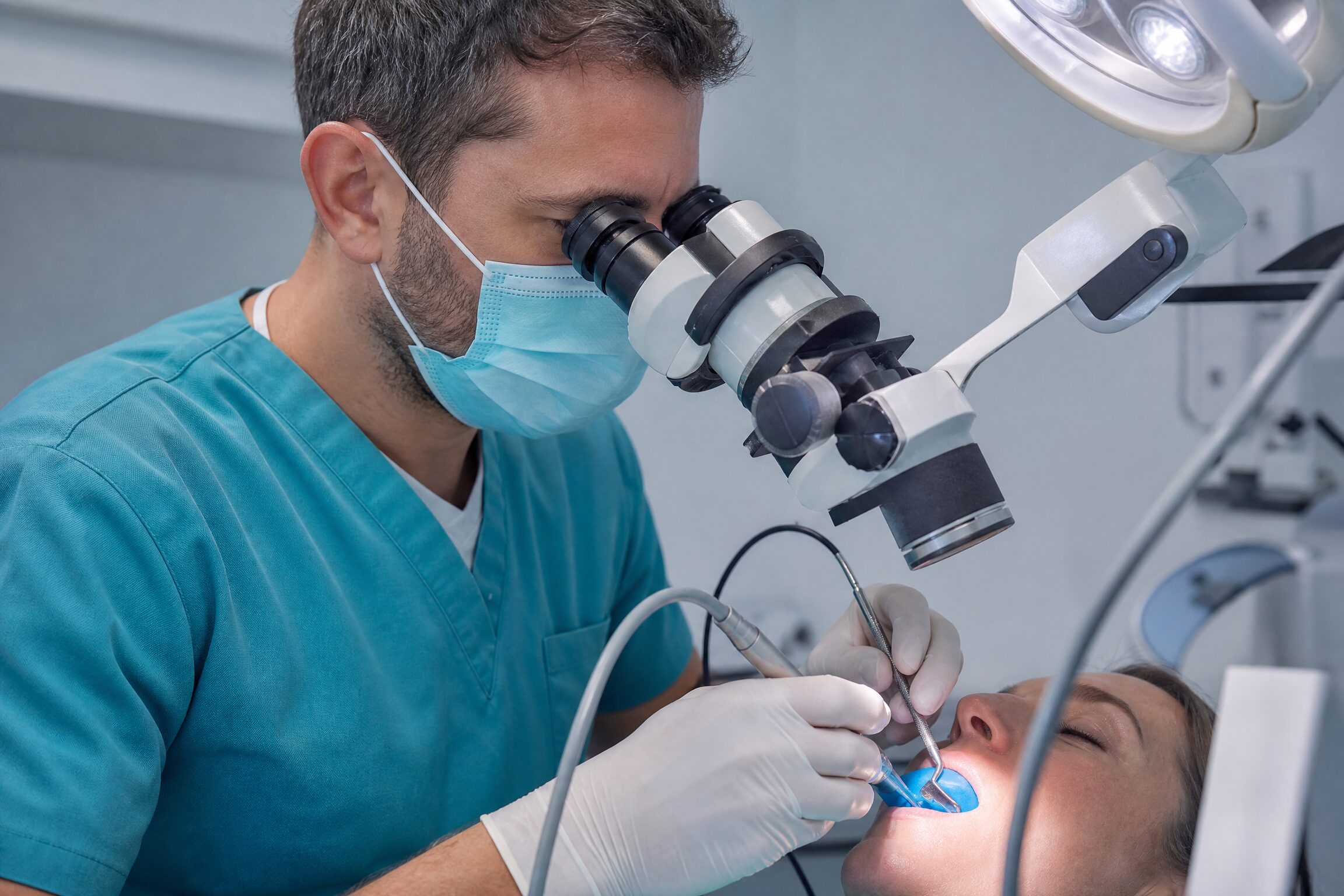
Understanding the Procedure
Inside every tooth is a soft tissue called the pulp — a collection of nerves, blood vessels, and connective tissue. When bacteria reach the pulp through deep decay, a crack, or trauma, the pulp becomes infected. Left untreated, the infection spreads to the surrounding bone and can cause the tooth to be lost entirely.
Root canal therapy removes the infected pulp, thoroughly cleans and shapes the root canals, and seals the tooth to prevent reinfection. Once the pulp is removed, the tooth can survive perfectly well — it’s nourished by the surrounding tissues, not the pulp. The procedure eliminates the source of infection and the pain that comes with it.

Why It Matters
When a tooth is severely infected, extraction might seem like the simpler solution. But losing a tooth creates a chain of consequences that are far more complex and involved than the root canal you were trying to avoid.
Natural teeth are irreplaceable in their function. They maintain the spacing of neighboring teeth, stimulate the jawbone to prevent bone loss, and provide chewing efficiency that no artificial replacement fully replicates. Root canal therapy, followed by a crown, gives you the best possible outcome: your natural tooth, restored to full function, with the infection gone.

Dental Emergencies
A dental abscess or severely infected tooth is a genuine emergency. The infection can spread rapidly, and the pain can be debilitating. If you’re experiencing severe tooth pain, facial swelling, or a dental abscess, don’t wait for a routine appointment.
Charlottesville Dental Associates offers same-day emergency appointments for patients in acute pain. We serve patients from across Charlottesville, Crozet, Waynesboro, Staunton, and Albemarle County. Call us at (434) 296-8043 and we’ll do everything we can to see you the same day.
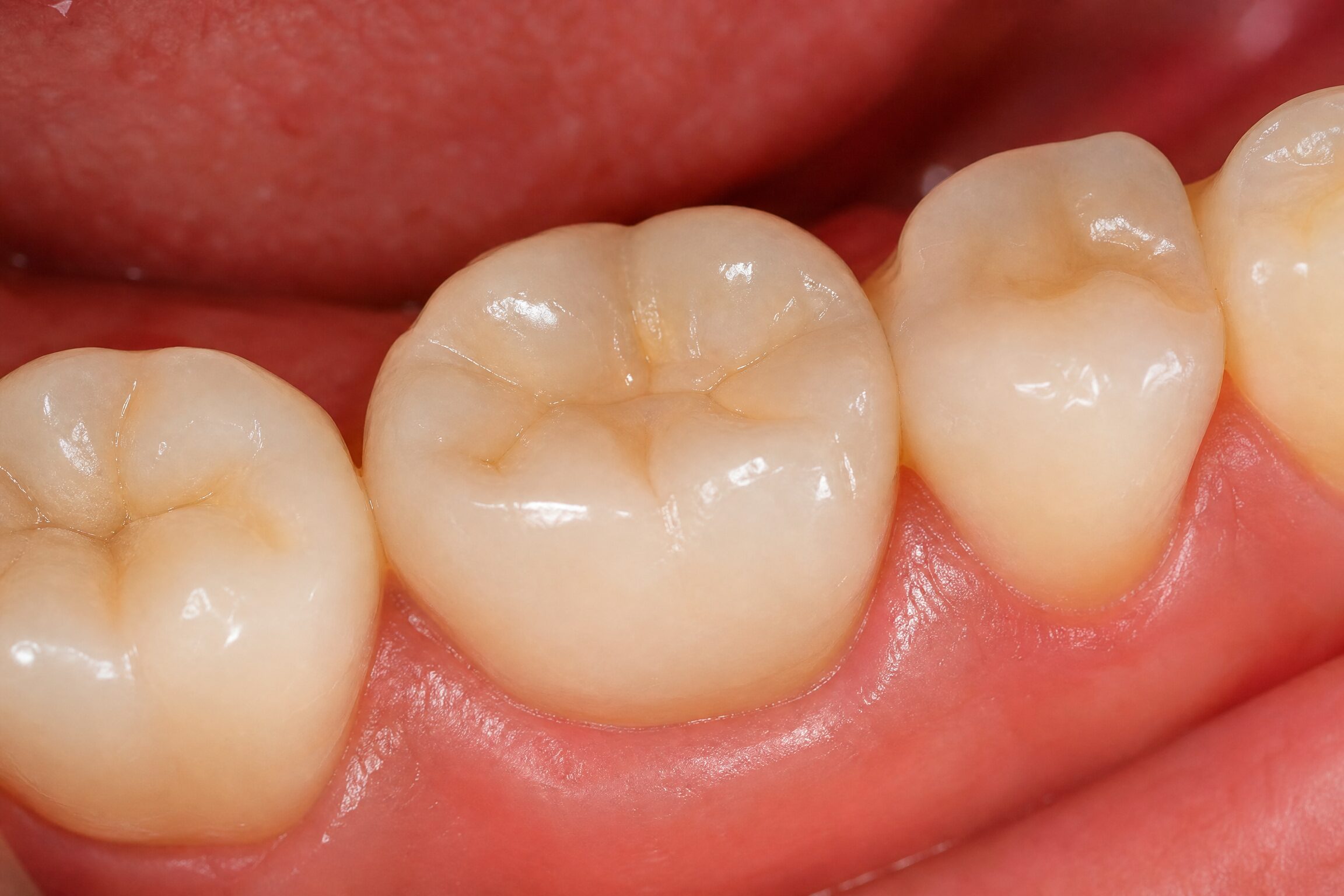
Completing the Restoration
Root canal therapy removes the infected tissue and seals the tooth — but the tooth is now more brittle than before. For back teeth that absorb significant chewing force, a dental crown is almost always recommended to protect the tooth from fracture and restore its full function.
At Charlottesville Dental Associates, we handle both the root canal and the crown restoration in-house. You don’t need to be referred to a specialist for most root canal cases. We coordinate your care from start to finish, ensuring a seamless transition from root canal therapy to the final crown placement.
Knowing exactly what to expect takes the fear out of the procedure. Here’s the complete process from start to finish.
We examine the tooth, take X-rays to assess the extent of infection and root anatomy, and confirm that root canal therapy is the right treatment.
We thoroughly numb the tooth and surrounding area. You’ll feel pressure but no pain. We take our time here — your comfort is the priority.
A small access opening is made in the tooth. The infected or dead pulp tissue is carefully removed from the pulp chamber and root canals.
The root canals are cleaned, shaped, and disinfected with fine instruments and antimicrobial solution to eliminate all bacteria and infected tissue.
The canals are filled with gutta-percha and sealed. The tooth is then restored — typically with a crown — to protect it and restore full function.
Root canal therapy requires skill, patience, and a team that genuinely prioritizes your comfort. Here’s what sets us apart.
We don’t begin until you’re completely numb. We check in throughout the procedure. If you need a break, we stop. Your comfort isn’t a courtesy — it’s how we practice dentistry.
We use digital X-rays and cone beam imaging to accurately assess root anatomy and infection extent before treatment begins — ensuring precise, complete treatment every time.
Most patients don’t need a specialist referral. We perform root canal therapy and place the final crown right here in our Charlottesville office — one team, one relationship, no extra appointments at an unfamiliar practice.
We’re at 1227 Cedars Ct, Charlottesville, VA 22903 — easily accessible from Crozet, Waynesboro, Staunton, and throughout Albemarle County. Free parking, no stress getting here.
Dental infections don’t wait for convenient appointment slots. We offer same-day emergency appointments for patients in acute pain. Call us — we’ll make room for you.
Charlottesville Dental Associates has been serving this community for over 25 years. Our patients return — and refer their families — because they know they’ll receive honest, skilled care every time.

The most common thing patients say after a root canal is that they wish they hadn’t waited so long. Here’s what typically changes after treatment:
“I had been putting off a root canal for months because I was terrified. I finally couldn’t take the pain anymore and called. The procedure was genuinely painless — I barely felt anything. I was so relieved I almost cried. I wish I had gone sooner.”
“I called with severe tooth pain on a Monday morning and they got me in the same day. The root canal was done that afternoon. The pain that had been waking me up at night was gone by the next morning. Exceptional care.”
“I appreciated that they handled both the root canal and the crown in the same office. No referrals, no new dentist to get used to. They explained everything clearly and made sure I was comfortable throughout. Highly recommend.”
Misinformation about root canals causes patients to delay treatment and suffer unnecessarily. Here’s what’s actually true.
This is the most persistent myth in dentistry. Root canals are performed under local anesthesia — you feel pressure, not pain. Most patients rate the experience as no worse than getting a filling.
The pain you feel before a root canal is caused by the infection. The procedure removes that infection and its source. Most patients experience significant relief within 24–48 hours of treatment.
Extraction seems simpler, but losing a natural tooth creates a chain of problems — shifting teeth, bone loss, and the need for implants or bridges that are far more involved than a root canal.
With proper restoration (a crown) and good oral hygiene, a root canal treated tooth has survival rates comparable to natural teeth. Saving your natural tooth is almost always the better long-term outcome.
Most root canals are completed in a single appointment of 60–90 minutes. Complex cases may require a second visit. The crown placement is a separate appointment, but the root canal itself is typically done in one visit.
Not all infected teeth cause pain. Some abscesses are discovered only on X-rays. A painless infection is still spreading — and still needs to be treated before it affects neighboring teeth and bone.
We accept most major PPO dental insurance plans. Root canal therapy is typically covered as a restorative procedure. We verify your benefits before your appointment so you know what to expect.
We offer CareCredit financing with promotional interest-free periods. Spread the cost of your treatment into manageable monthly payments. Apply quickly before your appointment.
We provide a complete cost breakdown before any treatment begins. No hidden fees, no billing surprises. We want you to feel confident about your care from the very first conversation.
Tooth pain from an infected pulp won’t resolve on its own — and the longer you wait, the more complex the treatment becomes. Call us or book online. We’ll get you out of pain and save your tooth.