
Dentures that stay firmly in place — anchored by dental implants so you can eat, speak, and smile with complete confidence. No adhesive, no slipping, no worry.
If you currently wear conventional dentures and struggle with slipping, adhesive, sore spots, or the inability to eat certain foods — implant-supported dentures offer a fundamentally different experience. Two to four dental implants are placed in your jawbone and serve as anchors for your denture, which snaps securely onto them. The result is a denture that stays firmly in place during eating, speaking, and laughing.
At Charlottesville Dental Associates, we’ve been helping patients across Charlottesville, Crozet, Waynesboro, and Albemarle County transition from conventional dentures to implant-supported solutions for over 25 years. The patients who make this transition consistently describe it as one of the most meaningful improvements to their quality of life.
What our patients tell us: “I can eat what I want again.” “I stopped worrying about my denture moving when I talk.” “I forgot what it felt like to have stable teeth — now I remember.” These are the outcomes we work toward with every implant-supported denture case we treat.
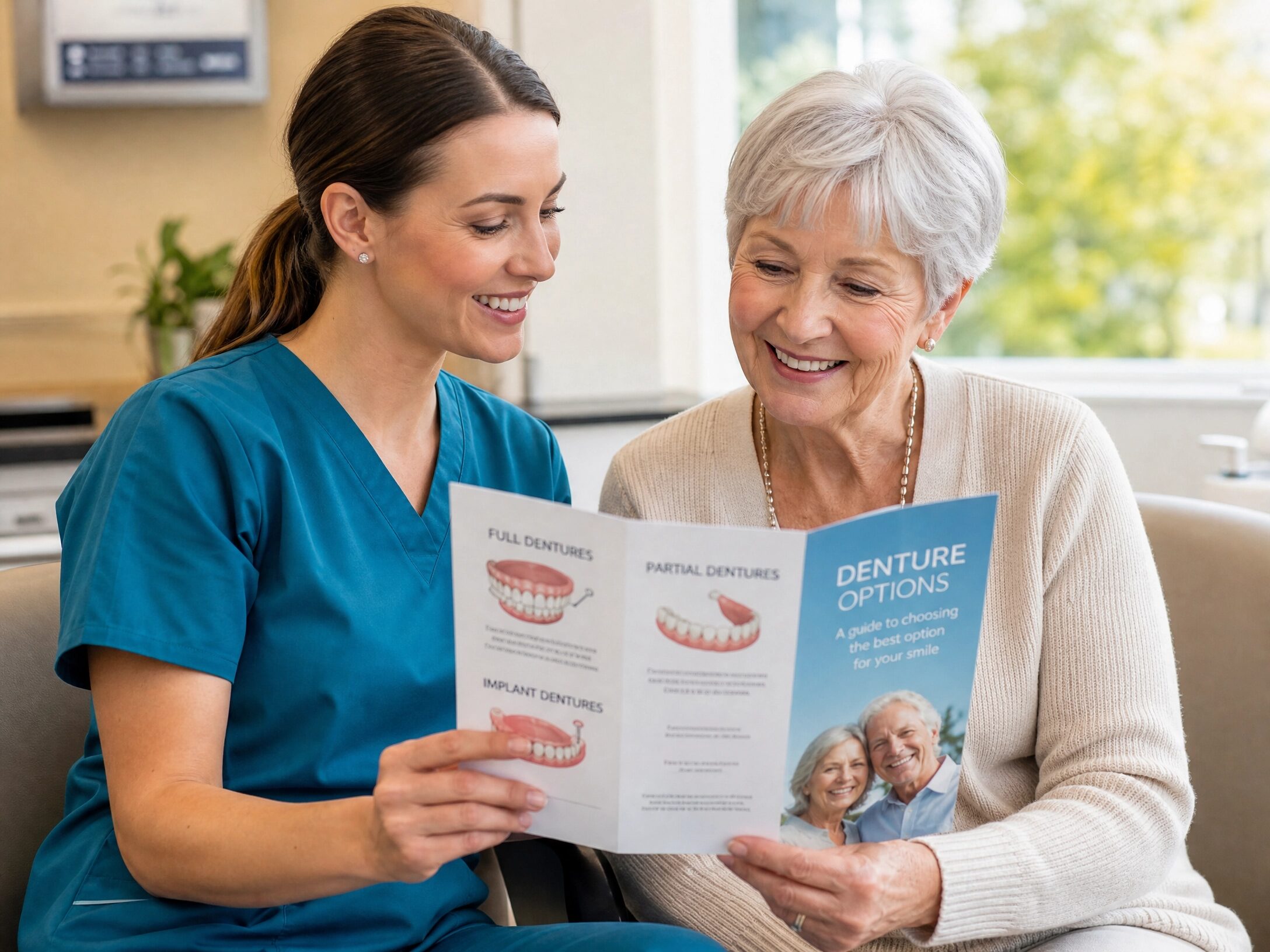
These are the most common situations where our patients find implant-supported dentures to be the right answer.
If your denture moves when you eat, speak, or laugh — especially the lower denture, which has less surface area for suction — implant anchors eliminate the movement entirely.
Denture adhesive is a daily inconvenience and an indicator that your denture isn’t fitting as well as it should. Implant-supported dentures require no adhesive — they snap securely into place.
Many conventional denture wearers avoid steak, raw vegetables, crusty bread, and other foods because of instability or discomfort. Implant-supported dentures restore significantly more chewing function.
A denture that shifts when you talk affects speech clarity and confidence. Implant anchors eliminate the movement, allowing you to speak naturally and confidently in any situation.
Conventional dentures provide no bone stimulation and can actually accelerate bone resorption over time. Implants stimulate the jawbone, slowing bone loss and helping maintain facial structure.
Conventional dentures require relining as the jawbone changes shape over time. Implant-supported dentures slow this process by preserving bone, reducing the frequency of adjustments needed.

The Technology
Implant-supported dentures use 2 to 4 titanium implant posts placed in the jawbone as anchors. The denture is fitted with special attachments — typically ball-and-socket or bar-clip connectors — that snap onto the implants. The denture clicks firmly into place and stays secure during all normal activities.
Unlike conventional dentures that rely on gum tissue suction and adhesive, the implant anchors provide mechanical retention. The denture doesn’t move. You eat, speak, and laugh with the same confidence you had with natural teeth. At the end of the day, you remove the denture for cleaning — just as you would with a conventional denture, but without the frustration of instability throughout the day.

A Significant Stability Upgrade
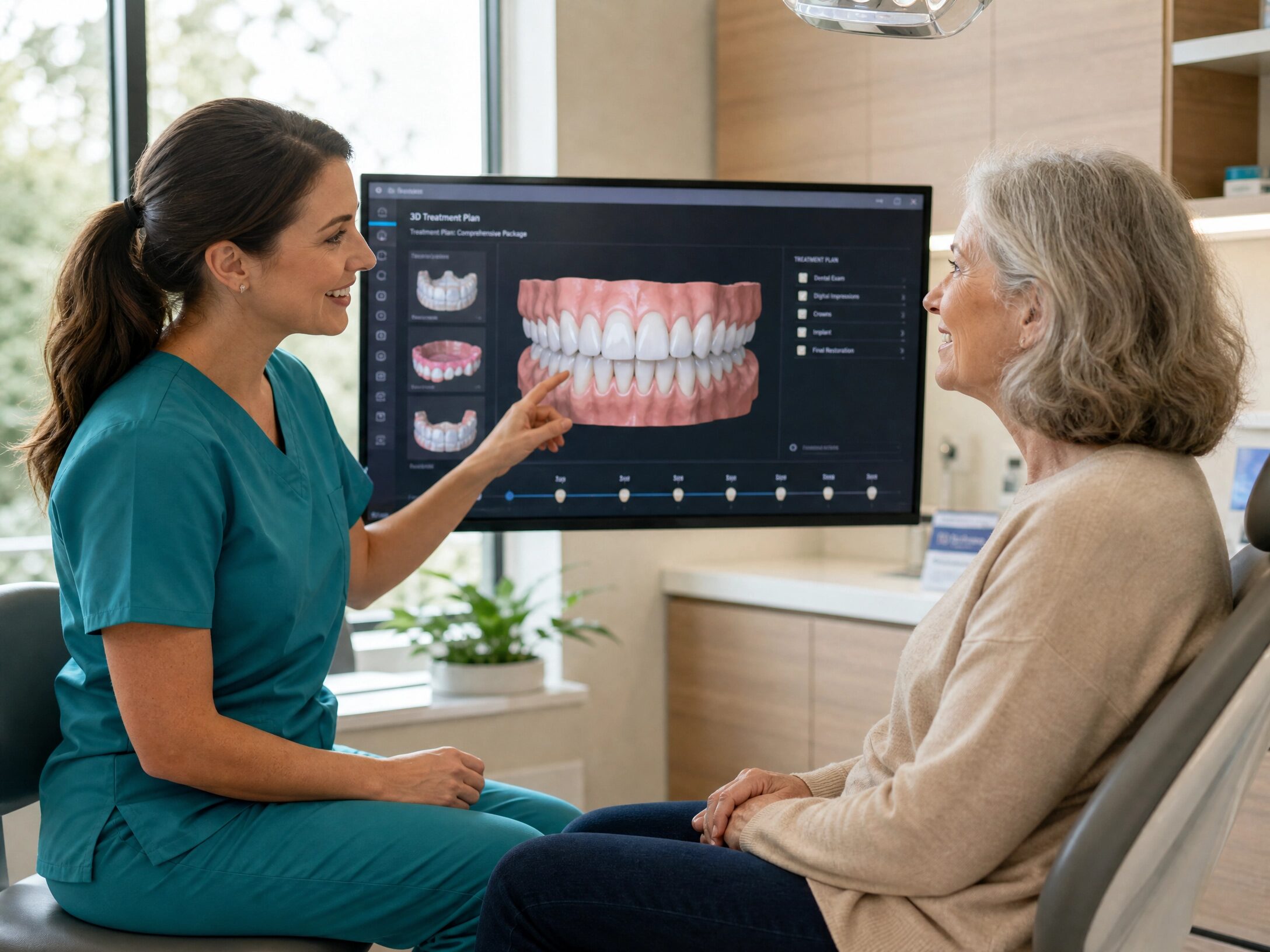
A two-implant overdenture is one of the most widely used implant-supported denture configurations, particularly for the lower arch. Two implants are placed toward the front of the jaw, and the denture snaps onto them using ball-and-socket attachments. The result is dramatically more stable than a conventional denture — especially the lower denture, which is the most prone to movement.
This option is often recommended for patients who want a significant improvement in stability with a more straightforward treatment process. It is particularly well-suited for the lower arch, where conventional dentures have the least natural retention. Many of our patients from Charlottesville and Crozet who were struggling with lower denture instability find this to be a life-changing solution.
Maximum Stability and Bone Preservation
A four-implant overdenture uses four strategically placed implants to support the denture, providing maximum stability and the best bone preservation across the full arch. The denture typically attaches via a bar-clip system that distributes forces evenly across all four implants, creating a very secure and comfortable fit.
This option is particularly well-suited for patients who want the highest level of stability in a removable restoration, or for those who have experienced significant bone loss and benefit from more distributed implant support. It is also the configuration most often used for the upper arch, where conventional dentures cover the palate and can affect taste and sensation.

Already Have Dentures?
Many of our patients come to us already wearing conventional dentures and wanting to upgrade to implant support. In many cases, your existing denture can be retrofitted with implant attachments — avoiding the need to fabricate an entirely new denture. We assess the fit and condition of your current denture during your consultation and advise whether retrofitting or a new denture is the better approach.
The transition process involves implant placement, a healing period, and then the attachment of the implant connectors to your denture. We provide a temporary solution during the healing period so you are never without teeth. The process is well-established and the outcome — for patients who have been struggling with conventional dentures for years — is consistently described as transformative.
Here’s exactly what to expect from consultation to your final, stable denture.
We assess your bone volume, evaluate your current denture, and create a personalized treatment plan. We’ll explain every option and answer every question.
If bone volume is insufficient, a graft rebuilds the foundation before implant placement. A temporary denture keeps you comfortable during healing.
2–4 titanium posts are placed under local anesthesia. Osseointegration takes 3–6 months. A temporary denture is provided during this period.
Once integration is confirmed, the implant attachments are connected and your denture is fitted or retrofitted. We verify the fit and make any adjustments needed.
Regular checkups, professional cleanings, and periodic attachment replacement (every few years) keep your implant-supported denture performing at its best.
We’ve been placing dental implants and fitting implant-supported dentures in Charlottesville for over two decades. Experience matters in treatment planning, placement precision, and long-term outcomes.
Precise 3D imaging allows us to evaluate bone volume and anatomy thoroughly before treatment planning — ensuring optimal implant positioning and minimizing risk.
We discuss all options — 2-implant vs 4-implant, retrofitting vs new denture, removable vs fixed — and recommend the approach that best fits your anatomy, goals, and circumstances.
Our practice has three experienced dentists, ensuring continuity of care and availability throughout your implant treatment — from placement through final fitting.
We take the time to ensure you’re comfortable and informed at every stage. We’ve guided many patients through this transition and understand the questions and concerns that come with it.
Conveniently located and easy to reach from Crozet, Waynesboro, Staunton, and Albemarle County. Early morning appointments available.
Here’s what our patients consistently tell us after transitioning from conventional to implant-supported dentures.
The most immediate change. Patients describe the sensation of a denture that simply doesn’t move as profoundly different from anything they experienced with conventional dentures.
Patients who had been avoiding steak, raw vegetables, and other foods for years find they can eat them again. The improvement in chewing function is consistently one of the most appreciated outcomes.
Without the worry of a denture shifting mid-sentence, patients speak more naturally and confidently in social and professional situations.
Implants stimulate the jawbone, slowing the bone resorption that conventional dentures cannot prevent. This helps maintain facial structure and reduces the frequency of denture relining.
Eliminating the daily routine of adhesive application and cleanup is a quality-of-life improvement that patients consistently mention as unexpectedly significant.
The combination of stability, improved function, and freedom from adhesive translates into a level of confidence and comfort that many patients describe as returning to a version of themselves they had missed.
“After years of struggling with my lower denture, the implant-supported overdenture changed everything. No more adhesive, no more slipping at dinner. I can eat whatever I want. I genuinely wish I had done this years earlier — it’s been life-changing.”
“I was nervous about the implant surgery but the team here made it so comfortable. The difference in my denture stability is remarkable. I can have a conversation without worrying about my teeth moving. That sounds small but it’s enormous when you’ve been living with the alternative.”
“They retrofitted my existing denture onto two implants and the result was exactly what I hoped for. The process was well-explained, the team was patient with all my questions, and the outcome has genuinely improved my daily life. Highly recommend to anyone on the fence.”
An honest comparison to help you understand the differences between your full-arch replacement options.
| Factor | Implant-Supported Denture | Conventional Denture | Fixed Implant Bridge |
|---|---|---|---|
| Stability | Excellent — snaps onto implants | Poor to moderate — relies on suction | Maximum — permanently fixed |
| Adhesive Required | No | Often yes | No |
| Removable | Yes — for daily cleaning | Yes — required | No — permanent |
| Bone Preservation | Good — implants stimulate bone | Poor — accelerates bone loss | Excellent |
| Chewing Function | Significantly improved vs conventional | Reduced — especially lower arch | Most natural — closest to real teeth |
| Treatment Complexity | Moderate — 2–4 implants | Simple — no surgery | More complex — 4–6+ implants |
| Maintenance | Daily cleaning + periodic attachment replacement | Daily cleaning + relining every few years | Daily cleaning — no removal needed |
We work with most major insurance plans and offer flexible payment options to help make implant-supported dentures accessible.
Many PPO plans include partial coverage for implants and dentures. We’ll verify your benefits and explain exactly what your plan covers before treatment begins.
We accept CareCredit, offering flexible payment plans including interest-free options. Apply online or in our office before your consultation.
We offer in-office payment arrangements to spread the investment over the course of your treatment. Ask our team about available options at your consultation.
Call (434) 296-8043 and our team will check your insurance benefits before your consultation so you arrive fully informed about your coverage.
The first step is a conversation. We’ll assess your bone volume, evaluate your current denture situation, and give you an honest picture of what implant-supported dentures can achieve for your specific case. No pressure — just clear information so you can make the right decision.