
Comprehensive root canal therapy and endodontic care to relieve pain, eliminate infection, and save your natural tooth — performed with precision and genuine care for your comfort.
Save Your Natural Tooth
Endodontics is the field of dentistry focused on diagnosing and treating conditions affecting the dental pulp — the soft tissue inside your tooth containing nerves, blood vessels, and connective tissue. When the pulp becomes infected or inflamed due to deep decay, a cracked tooth, or trauma, endodontic treatment is often the only way to save the tooth.
At Charlottesville Dental Associates, we’ve been providing endodontic care as part of our comprehensive dental services for over 25 years. We understand that patients often arrive for root canal treatment feeling anxious — and we take that seriously. Our approach prioritizes your comfort at every step, from the initial anesthesia to the final restoration.
Root canal therapy has an undeserved reputation for being painful. In reality, the procedure relieves the pain caused by infection — it doesn’t cause it. Modern techniques and effective anesthesia make root canal treatment far more comfortable than most patients expect.

When Endodontic Treatment May Be Needed
A toothache that is severe, throbbing, or persistent — especially one that wakes you at night — is one of the most common indicators of pulp infection or inflammation requiring endodontic treatment.
While brief sensitivity to hot or cold is common, sensitivity that lingers for more than a few seconds after the stimulus is removed may indicate that the pulp is inflamed or infected.
A tooth that has darkened or changed color — particularly following trauma — may indicate that the pulp has been damaged or has died, even if no pain is present.
Swelling, tenderness, or a small bump (fistula) on the gum near a tooth can indicate an abscess — a pocket of infection at the root tip that requires prompt endodontic treatment.
Discomfort when biting down or chewing on a specific tooth can indicate pulp involvement, a cracked tooth, or an abscess — all of which may require endodontic evaluation.
Some teeth requiring root canal treatment have no symptoms at all. Infection or pulp death can be detected on X-rays during routine check-ups — which is one reason regular dental visits matter.
The Most Common Endodontic Procedure
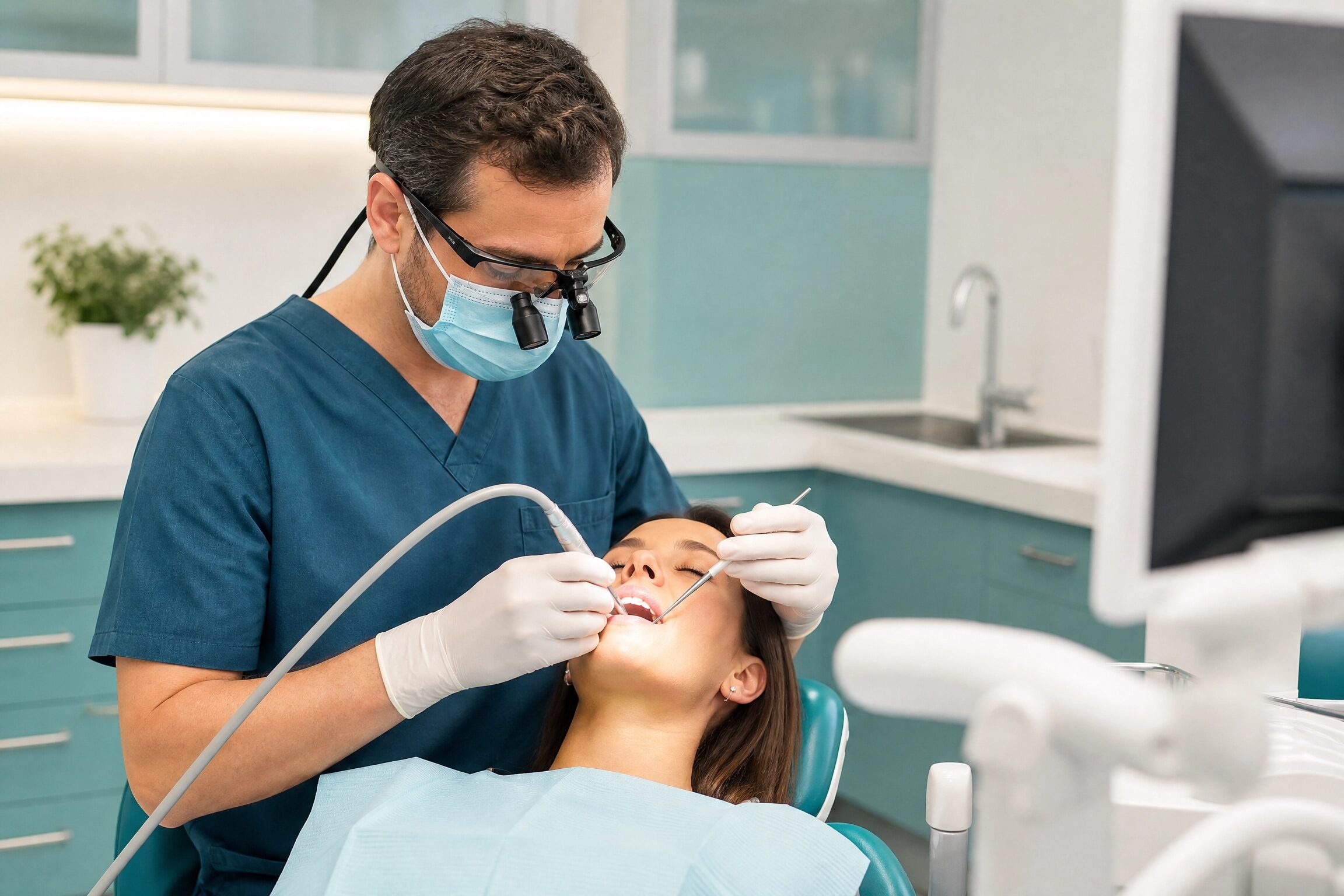
Root canal therapy removes the infected or inflamed pulp from inside the tooth, cleans and shapes the root canals, and seals them with a biocompatible filling material. The result is a tooth that is free of infection, no longer painful, and structurally intact — ready to be restored with a crown.
We perform root canal therapy with precision and care, using effective local anesthesia to ensure your comfort throughout the procedure. Most patients are surprised by how manageable the experience is compared to their expectations.
When Initial Treatment Needs Revision
Occasionally, a tooth that has undergone root canal therapy does not heal as expected — or develops new problems months or years later. Endodontic retreatment involves re-opening the tooth, removing the existing root canal filling material, re-cleaning and re-shaping the canals, and placing new filling material.
Retreatment is often successful and can save a tooth that might otherwise require extraction. We’ll evaluate your tooth thoroughly — including updated X-rays — to determine whether retreatment is appropriate and what the prognosis is for long-term success.

Serving Charlottesville & Surrounding Communities
Dental infections don’t wait for convenient timing. When you’re experiencing severe tooth pain, swelling, or signs of abscess, prompt endodontic treatment is essential. We make every effort to see patients with dental emergencies as quickly as possible — often on the same day.
We also provide pulp capping — a conservative procedure to protect an exposed or nearly exposed pulp in a tooth that has not yet developed full infection — as an alternative to root canal therapy when appropriate. We serve patients from throughout the Charlottesville area, including Crozet, Waynesboro, Staunton, and Albemarle County.

Completing Your Endodontic Treatment
A tooth that has undergone root canal therapy has had its blood supply removed, which makes it more brittle and susceptible to fracture over time. In most cases, we recommend placing a dental crown after root canal therapy to protect the tooth from cracking and restore full chewing function.
We coordinate the crown placement as part of your overall treatment plan, ensuring a seamless transition from endodontic treatment to final restoration. The crown is custom-fabricated to match your natural teeth in color and shape.
Setting the Record Straight
Myth
Root canal therapy is performed under local anesthesia and is no more uncomfortable than having a filling placed. The pain patients associate with root canals is the toothache that precedes treatment — not the treatment itself.
Fact
The purpose of root canal therapy is to remove the source of infection and pain. Most patients experience significant relief within days of treatment, and many feel better immediately after the procedure.
Myth
Extracting a tooth creates its own set of problems — adjacent teeth shift, bone loss occurs, and replacement options (implants, bridges) involve additional procedures. Saving a natural tooth is almost always preferable when possible.
Fact
Natural teeth are stronger, more functional, and better for long-term oral health than any replacement. Root canal therapy has a success rate over 95% and can allow a tooth to last a lifetime with proper care.
Myth
This claim originates from discredited research from the early 20th century. Modern scientific evidence does not support any link between root canal therapy and systemic illness. Root canal treatment is safe and effective.
Fact
Root canal therapy is one of the most thoroughly studied and validated procedures in dentistry. It is endorsed by the American Association of Endodontists and supported by decades of clinical evidence.
Your Endodontic Journey
We examine your tooth, take X-rays, and assess the extent of pulp involvement. We’ll explain our findings clearly and discuss your treatment options before proceeding.
Local anesthesia is administered for your comfort. A small opening is made in the crown of the tooth to access the pulp chamber and root canals.
The infected pulp is removed and the root canals are carefully cleaned, shaped, and disinfected using precise instruments and irrigating solutions.
The cleaned canals are filled with a biocompatible material and sealed. A temporary or permanent filling is placed in the access opening.
A dental crown is placed to protect the treated tooth and restore full function. We coordinate this as part of your overall treatment plan.
Why Patients Choose Us
Our team has been providing comprehensive dental care — including endodontic treatment — in Charlottesville for over 25 years. We bring that depth of experience to every case we evaluate.
We take patient anxiety seriously. We use effective anesthesia, explain every step before we take it, and ensure you feel in control throughout your endodontic treatment.
Endodontic success depends on thorough cleaning and shaping of the root canals. We use precise instruments and techniques to ensure complete removal of infected tissue.
Our practice has three experienced dentists, ensuring availability for emergency appointments and continuity of care throughout your treatment and recovery.
We provide both the endodontic treatment and the crown restoration under one roof — no referrals, no coordination between practices, just seamless, comprehensive care.
We’ll tell you honestly when a tooth can be saved and when extraction is the more appropriate option. Our goal is the right outcome for your long-term oral health.
What Patients Experience
The most immediate and consistent result of root canal therapy is relief from the toothache that brought patients in. Most patients feel significantly better within days of treatment.
Saving your natural tooth means preserving the bone around it, maintaining the alignment of adjacent teeth, and avoiding the need for a bridge or implant.
After crown placement, the treated tooth functions normally — you can chew on it, brush it, and care for it just like any other tooth in your mouth.
Root canal therapy eliminates the bacterial infection that was causing pain and threatening the surrounding bone and tissue. The tooth is sealed to prevent reinfection.
With proper restoration and regular dental care, a root-canal-treated tooth can last a lifetime. Many of our patients have kept their treated teeth for 20 years or more.
Knowing the infection is gone and the tooth is protected allows patients to stop worrying about the tooth and get back to normal life — often within a day or two of treatment.
Patient Stories
“I was terrified of getting a root canal. The team at Charlottesville Dental Associates made it completely comfortable — I barely felt anything. The relief afterward was immediate. I wish I hadn’t waited so long.”
“I had a root canal done years ago elsewhere that never fully healed. The team here did a thorough retreatment and the tooth has been perfect ever since. Incredibly professional and caring.”
“I called with severe tooth pain on a Monday morning and they got me in the same day. The root canal was done that afternoon and I was back at work the next day. Exceptional care.”
Making Care Accessible
We accept most major PPO dental insurance plans. Root canal therapy is typically covered as a restorative procedure. Our team will verify your benefits and explain your coverage before treatment begins.
We accept CareCredit and other financing options to help make endodontic care accessible. Flexible payment plans are available. Ask our team for details at your consultation.
We provide clear, written estimates before beginning any treatment. No surprises. Our team is happy to answer any questions about your investment in saving your natural tooth.
Common Questions
If you’re experiencing tooth pain, sensitivity, or swelling, prompt evaluation and treatment can make all the difference. Contact Charlottesville Dental Associates — we’ll assess your situation and help you understand your options for saving your natural tooth.
Schedule an Endodontic Consultation